
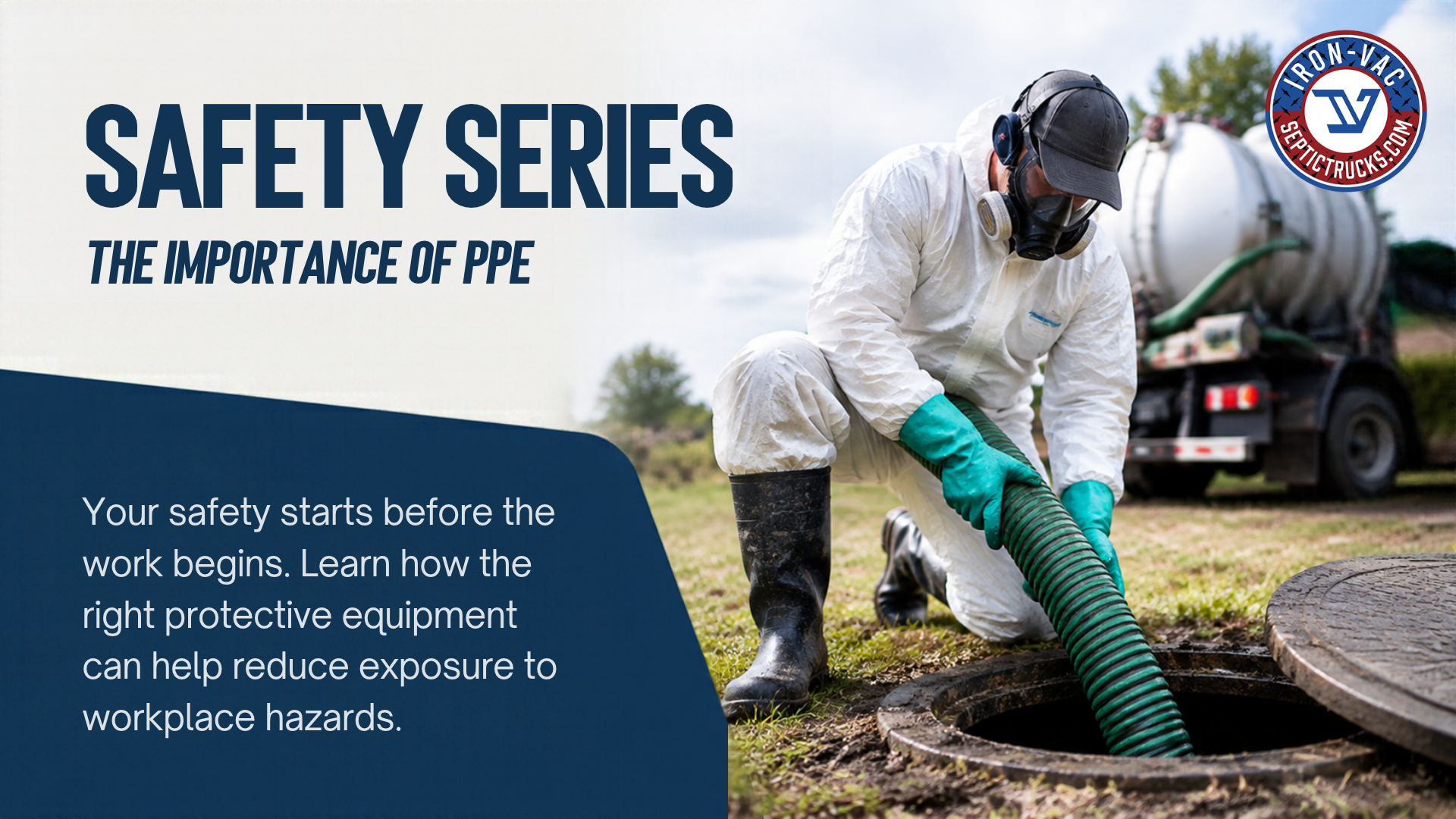
Pumper Safety: The Importance of PPE
By April | Compliance & Quality Control Specialist
According to the U.S. Environmental Protection Agency (EPA), more than 60 million people nationwide are served by septic systems. With so many homes and businesses relying on septic systems, septic pumpers play an important role in keeping these systems operating properly.
However, working with septic waste comes with potential health and safety risks. Personal Protective Equipment (PPE) is an important precaution that helps protect pumpers from exposure to hazardous materials, contaminants, and other workplace hazards.
Wearing the appropriate PPE for the job can help reduce the risk of injury and exposure.
Protective Clothing
Protective clothing helps create a barrier between septic pumpers and the waste materials they handle. This may include protective suits, gloves, and boots designed for the conditions and hazards of the job.
One commonly used option is a Tyvek suit, which can help protect against dirt, splashes, and certain contaminants. However, protective clothing should always be selected based on the specific materials and hazards involved.
Respiratory Protection
Septic pumpers may be exposed to airborne contaminants, particles, and potentially dangerous gases when working with waste materials or opening septic tanks.
Appropriate respiratory protection is important when hazards are present. The type of protection needed depends on the specific exposure. Respirators must be properly selected and used as part of an appropriate respiratory protection program. A standard dust mask does not protect against hazardous gases.
Safety Glasses
Safety glasses help protect a pumper’s eyes from debris, splashes, chemicals, and other particles that may become airborne during a job.
Protective eyewear should be selected to provide adequate coverage for the task being performed and should be worn whenever there is a risk of eye exposure.
Protective Footwear
Protective footwear helps protect pumpers from sharp objects, slippery surfaces, and other hazards commonly found on job sites.
Rubber boots are commonly worn because they provide a barrier against wet and muddy conditions. Depending on the job, steel-toe or other protective-toe boots may also be appropriate.
Don’t Overlook Your PPE
Personal Protective Equipment is an important part of staying safe in the septic pumping industry. Protective clothing, appropriate respiratory protection, safety glasses, and protective footwear all play a role in reducing exposure to workplace hazards.
Taking the time to wear the right equipment before starting a job is a simple but important step toward protecting yourself and making sure you get home safely.
Safety Series | Part 1